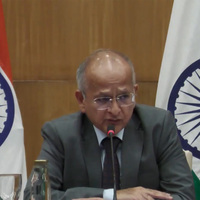


New Delhi [India], June 4 (ANI): India's manufacturing competitiveness will increasingly depend on building resilient and future-ready ecosystems driven by Industry 4.0, artificial intelligence (AI), advanced automation, and smart supply chains, Department of Consumer Affairs Secretary Nidhi Khare said on Thursday.
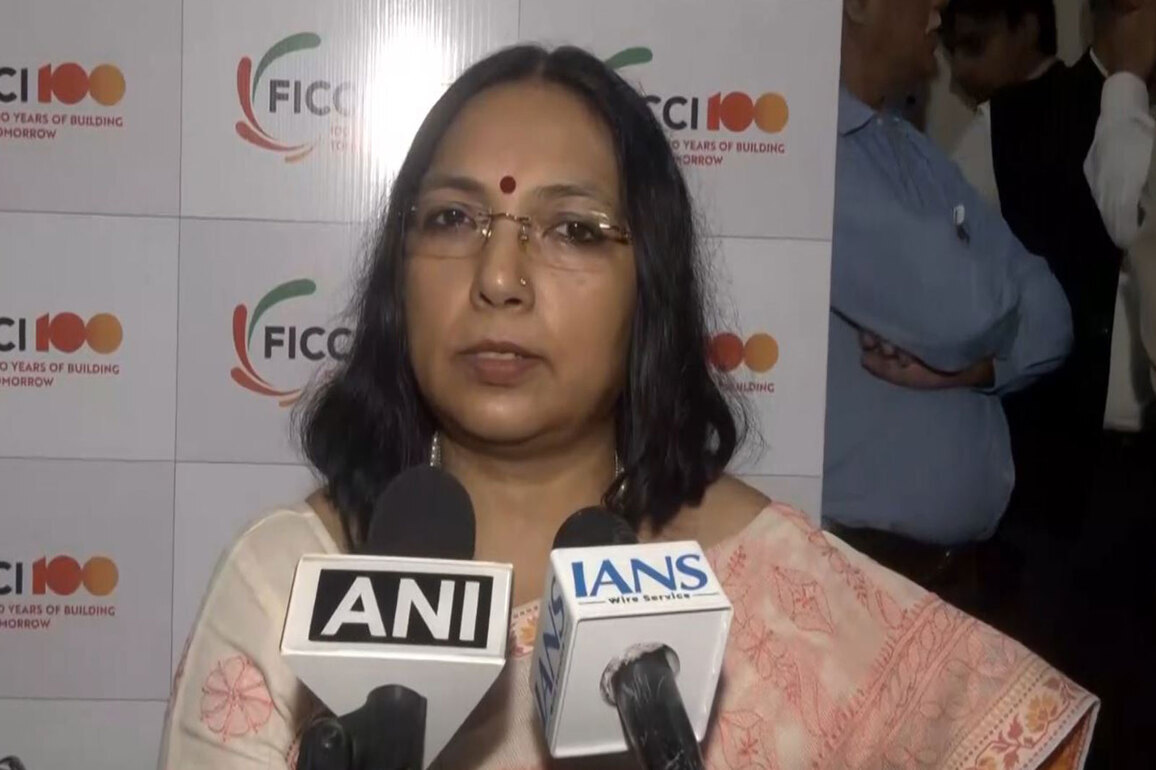
Addressing the 11th Conference on Quality Systems for Global Manufacturing Competitiveness and FICCI Awards for Excellence in Quality Systems, Khare said India is emerging as a preferred global manufacturing destination and that the sector will play a key role in achieving the vision of Viksit Bharat 2047.
'In an era shaped by Industry 4.0, artificial intelligence, advanced automation, smart supply chains and data-driven production systems, the competitiveness of nations will depend on their ability to build resilient and future-ready manufacturing ecosystems,' Khare said.
She said manufacturing competitiveness today goes beyond production efficiency and is increasingly linked to innovation, quality, sustainability, consumer trust, technology integration and global competitiveness.
Speaking to ANI on the sidelines of the event, Khare stressed that quality remains at the core of economic growth and consumer confidence.
'Quality is not merely a manufacturing perspective, it is the foundation of consumer trust. Every purchase which is made by a consumer represents the confidence that the product is safe, reliable, compliant, and performs as promised,' she said.
Khare said India should aim to become a global leader in quality standards over the coming decades.
'We need to now focus our attention on how we become the quality leaders, the trendsetters for the global markets. So quality is not just a pathway to development, it is also a destination in itself,' she said.
She noted that India is playing a greater role in international standard-setting bodies and is gaining recognition in emerging technologies, strengthening its position in developing global standards.
Highlighting the importance of standardisation, Khare said innovation must be supported by scientific validation, research and established protocols to achieve scale and wider acceptance.
Referring to the success of gold hallmarking, she said the expansion of testing infrastructure through private-sector participation demonstrated that large-scale quality initiatives can be implemented effectively without direct government ownership of testing facilities.
Khare said the government is encouraging private-sector and cluster-based testing infrastructure while pursuing deregulation and simplification measures to improve ease of doing business.
She also urged industry stakeholders to actively participate in standards formulation and review processes, adding that outdated standards and testing methods are being replaced with more accurate and scalable systems.
On the use of technology in governance and standardisation, Khare said, 'We have to also have some machine-readable standards and smart standards so that people don't have to read through the seven pages of the standards, that the machine can itself read them.'
She added that the government remains open to industry feedback to improve standards, testing systems and regulatory processes while ensuring consumer trust and market integrity remain central to India's manufacturing growth. (ANI)